
Reflecting on progress, strengthening accountability, and shaping the next phase of change
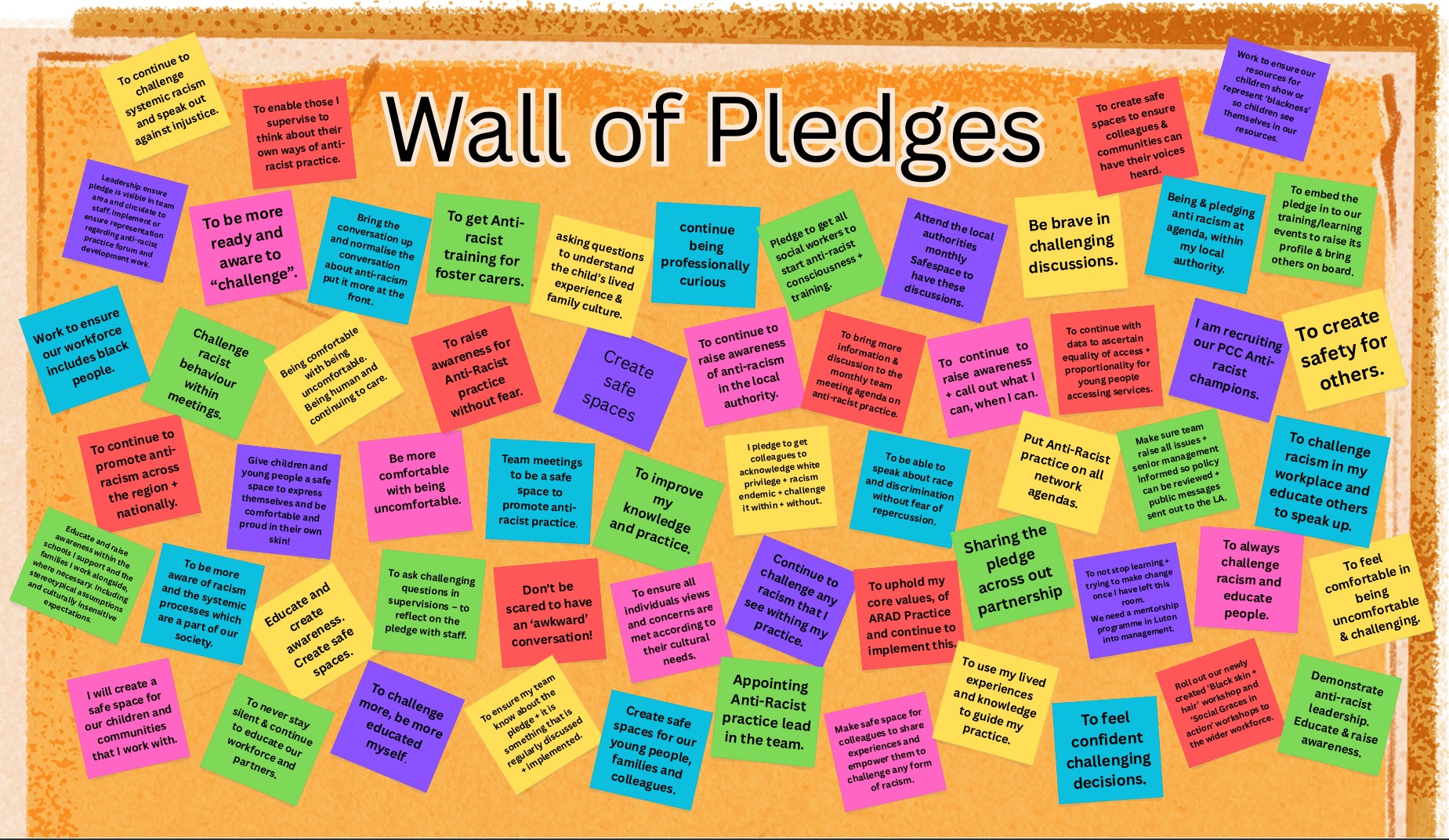
In May 2026, colleagues from across the Eastern Region and beyond came together to mark an important milestone: the first anniversary of the Eastern Region Anti-Racist Practice Pledge.
The webinar brought together leaders, practitioners and partners from across children’s services, including the Eastern Region Director of Children’s Services lead, representatives from Social Work England, senior leaders from across the region, and the President of the Association of Directors of Children’s Services (ADCS). Their collective message was clear: while the region has made meaningful progress, anti-racism remains a long-term commitment that requires courage, accountability and sustained action.
From pledge to practice
When 11 local authorities jointly launched the Eastern Region Anti-Racist Practice Pledge in 2025, it signalled a shared ambition to move beyond statements of intent and towards practical, measurable change.
One year later, the region can point to significant achievements. Through collective leadership and collaboration, partners have established a regional leadership forum to provide challenge, scrutiny and shared learning. A diagnostic baseline has been completed across all 11 authorities, creating a clearer picture of where progress is being made and where disparities remain.
The region has also delivered a programme of anti-racist practice webinars and learning events that have engaged more than 300 professionals, while creating a dedicated quarterly reflective space led by and for Global Majority colleagues. Alongside this, the pledge has been launched directly with practitioners, strengthening understanding of what anti-racist practice looks like in everyday work with children, families and communities.
A recurring theme throughout the webinar was the importance of maintaining momentum. Speakers reflected on the growing recognition of anti-racist and anti-discriminatory practice within national children’s social care reforms and professional frameworks, while acknowledging that systemic inequalities continue to affect both the workforce and the families services support.
Why the work remains urgent
The East of England is becoming increasingly diverse, yet racial disproportionality continues to be evident across a range of measures.
Participants discussed disparities in referral pathways, outcomes for children, representation within leadership roles, career progression, recruitment experiences and professional regulation processes. A strong consensus emerged that data plays a critical role in making inequalities visible, but that numbers alone cannot tell the whole story.
To create meaningful change, data must be combined with lived experience. Understanding the human stories behind disparities allows organisations to identify root causes, challenge assumptions and develop responses that genuinely improve outcomes.
Listening to Black male social workers
One of the most powerful parts of the webinar focused on the region’s ongoing work with Black male social workers.
In Collaboration with Social Work England, a pilot was developed in response to evidence suggesting disproportionate referrals and progression through fitness to practise processes, a series of regional listening events has provided an opportunity for Black male social workers to share their experiences openly and honestly.
Participants spoke about racial and cultural misunderstandings, heightened scrutiny, feelings of isolation, barriers to permanent leadership opportunities and a lack of psychological safety in some workplaces. They also highlighted practical solutions that could help create more equitable environments.
Suggestions included anti-racist leadership, reflective supervision that recognises the impact of race and identity, fairer approaches to case allocation and referrals, visible career pathways, mentoring opportunities, peer support networks and safe spaces where collective voices can influence organisational change.
Social Work England shared updates on the actions it is taking in response to these issues, including the development of fair referral principles for employers, a single point-of-contact network, joint working with Skills for Care, and improvements to internal learning, development and decision-making processes.
The discussion reinforced a central message: cultural competence and anti-racist leadership are not optional extras. They are fundamental components of a fair and effective workforce.
Moving beyond commitment
While there was a strong sense of pride in the progress made so far, contributors were clear that signing a pledge is only the beginning.
Anti-racist practice must be visible in the everyday decisions organisations make about recruitment, supervision, workforce development, policy design and service delivery. It must influence how leaders respond to data, how practitioners build relationships with children and families, and how organisations create psychologically safe environments where people feel valued and heard.
The next phase of the regional programme will focus on embedding this approach even further. Priorities include the development of a regional anti-racist practice framework that sets out minimum expectations for all organisations, alongside a programme of twice-yearly self-evaluation and peer challenge.
Partners will also introduce an annual impact report, implement a standardised regional dataset covering both workforce and service-user outcomes, continue anti-racist practice learning events, maintain the Global Majority reflective space, explore collaborative approaches such as shared induction standards, and undertake a regional survey of Global Majority staff.
A shared responsibility
The webinar closed with a sense of hope, determination and collective responsibility.
One year on, the Eastern Region Anti-Racist Practice Pledge has demonstrated what can be achieved when organisations come together around a shared vision. Yet speakers emphasised that this is not a moment for complacency or celebration alone. The real measure of success will be the region’s ability to sustain momentum, hold itself accountable and continue challenging inequity wherever it exists.
The message to everyone working across children’s services was simple but powerful: anti-racist practice is central to delivering excellent services for children, young people and families. Creating lasting change is a shared responsibility, and it depends on all of us continuing to learn, listen, challenge, collaborate and act.